4 Dec 2025
- 0 Comments
There’s a story being told in boardrooms, legislative chambers, and social media feeds about sex work and trafficking-one that sounds urgent, moral, and righteous. But behind the headlines and the tearful testimonials lies a much messier truth. The anti-sex trafficking movement, once framed as a humanitarian crusade, has become a tool for moral panic, racial targeting, and the erosion of sex workers’ rights. And it’s not just happening overseas. It’s happening in cities like Auckland, Toronto, and Berlin, where laws meant to protect people are instead pushing vulnerable folks deeper into danger.
Some of the most aggressive campaigns push the idea that every person selling sex is a victim. That’s a dangerous oversimplification. It ignores the agency of adults who choose sex work for survival, flexibility, or even personal empowerment. In places like Dubai, where the legal gray zones are thick and enforcement is selective, you’ll hear stories of women labeled as ‘trafficked’ simply because they’re foreign and working independently. One woman, an Algerian migrant, was detained under a raid meant to ‘rescue’ trafficking victims-she was just trying to pay rent. Her case isn’t rare. You can read about similar situations involving escort girl dubaï, where the line between voluntary work and coercion is blurred by politics, not reality.
How ‘Rescue’ Became a Weapon
The modern anti-trafficking movement gained momentum in the late 1990s and early 2000s, fueled by evangelical groups, celebrity endorsements, and sensational media. Organizations like the Polaris Project and the International Justice Mission raised millions, built global networks, and convinced governments to pass laws criminalizing sex work under the guise of ‘ending exploitation.’ But here’s what those campaigns rarely mention: most people who are trafficked aren’t in brothels or on street corners. They’re in factories, farms, and domestic homes. The focus on sex work has diverted resources away from the real, hidden forms of forced labor.
When lawmakers pass bills like FOSTA-SESTA in the U.S. or the Nordic model in Sweden, they don’t just target pimps or traffickers. They shut down websites where sex workers screen clients, share safety tips, and build community. The result? More isolation, more violence, fewer options. A 2023 study from the University of Auckland found that after digital platforms were shut down, sex workers in New Zealand reported a 40% increase in unsafe encounters. The laws didn’t reduce demand-they made the work riskier.
Whorephobia Is Real-and It’s Institutionalized
Whorephobia isn’t just slurs or stares. It’s policy. It’s the social worker who assumes a woman on the street must be ‘rescued’ before asking if she needs food or a place to sleep. It’s the police officer who arrests a trans woman for ‘loitering with intent to solicit’ even when she’s just waiting for a ride. It’s the shelter that turns away sex workers because they ‘don’t fit the profile’ of a trafficking victim.
This bias is rooted in centuries of moral judgment. Sex work has always been a lightning rod for controlling women’s bodies, especially those of women of color, migrants, and queer people. In the U.S., the 19th-century Comstock Laws criminalized ‘obscene’ materials and targeted immigrant women. Today, the same logic lives on in raids that disproportionately target Latinx and Southeast Asian communities. In France, a 2022 report showed that 82% of people arrested under anti-prostitution laws were foreign-born. The same pattern repeats in Italy, Spain, and now, increasingly, in Australia.
When you hear politicians talk about ‘eradicating exploitation,’ ask who they’re really trying to erase. It’s rarely the traffickers. It’s the women who don’t conform to their idea of purity.
The Conspiracy Machine
There’s a growing belief among some activists that sex work is always exploitation-and that anyone who disagrees is part of a conspiracy. This isn’t just ideological. It’s becoming a cult-like narrative. Online, you’ll find forums where people claim that sex workers are ‘brainwashed’ by ‘pimps’ or ‘Big Sex,’ or that decriminalization is a front for human trafficking networks. These ideas aren’t based on evidence. They’re based on fear.
One viral TikTok trend in 2024 showed a woman claiming she was ‘saved’ from a trafficking ring in Dubai after she Googled ‘escort a dubai’ and got a message from a ‘rescue organization.’ The video got 12 million views. But when journalists checked, the ‘rescue org’ didn’t exist. The woman had never been in Dubai. The story was fabricated by a U.S.-based anti-sex work group to drum up donations. This isn’t an anomaly. It’s a playbook. Misinformation is now a fundraising tool.
Meanwhile, real survivors of trafficking are sidelined. Their stories don’t fit the neat, tear-jerking narrative. They don’t wear chains. They don’t cry on camera. They just want to rebuild their lives without being labeled as broken.
White Fragility and the Savior Complex
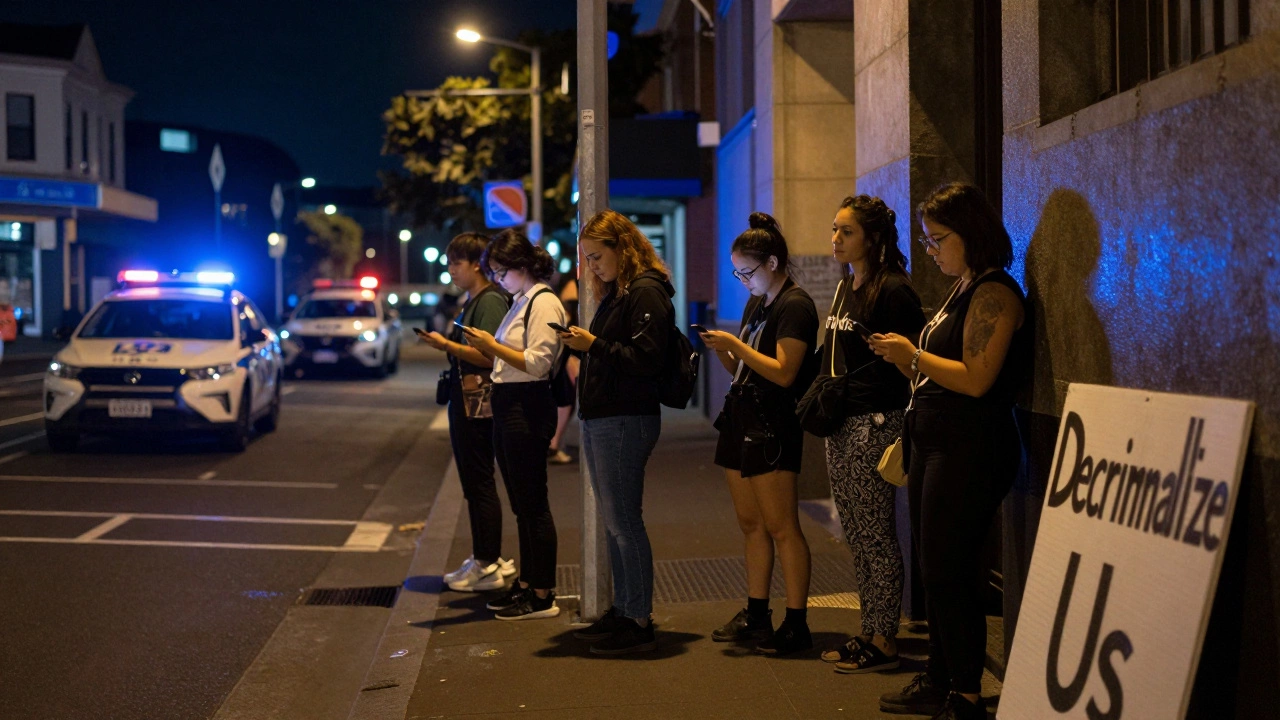
At the heart of this movement is white fragility-the fear that white people, especially white women, will lose moral authority if they admit that non-white women can make their own choices. The anti-trafficking industry is dominated by white, middle-class women who speak for others without listening. They organize rallies with signs that say ‘Save Our Sisters’ while ignoring the voices of Black, Indigenous, and migrant sex workers who say: ‘Don’t save me. Decriminalize me.’
This dynamic isn’t accidental. It’s structural. Funding flows to organizations led by white women. Media outlets amplify their voices. Politicians quote them. Meanwhile, grassroots groups led by sex workers-like the Global Network of Sex Work Projects or the Red Umbrella Fund-struggle to get $10,000 in grants while big NGOs pull in millions.
In 2023, a New Zealand sex worker collective applied for government funding to run peer-led safety workshops. Their application was rejected because the review panel said the project ‘lacked sufficient evidence of harm reduction.’ Meanwhile, a Canadian group run by white volunteers got $500,000 to run ‘awareness campaigns’ that didn’t include a single sex worker in their planning meetings.
The Data That Doesn’t Fit the Narrative
Let’s look at the numbers. The UN Office on Drugs and Crime estimates that 70% of trafficking victims are exploited for labor, not sex. The U.S. Department of State admits that only 10-15% of identified trafficking cases involve commercial sex. But in media reports and political speeches, sex trafficking makes up 80% of the conversation.
And what about decriminalization? In New Zealand, where sex work has been fully decriminalized since 2003, studies show that violence against sex workers dropped by 65%. Police reports show that 90% of sex workers now feel safe reporting crimes. In Sweden, where buying sex is illegal but selling it isn’t, sex workers report higher rates of police harassment and less access to health services.
The evidence is clear: criminalization doesn’t protect people. It punishes them.
What’s the Alternative?
There’s a better way. It’s called the decriminalization model-removing criminal penalties for selling and buying sex, while keeping trafficking and coercion illegal. It’s the model used in New Zealand, parts of Australia, and now, some cities in Canada. It doesn’t mean no rules. It means regulation that’s led by those who do the work.
Real solutions include:
- Legal protections for migrant sex workers, including access to visas and healthcare
- Funding for peer-led safety networks, not rescue missions
- Police training to distinguish between trafficking and consensual work
- Removing digital bans that cut off access to screening tools and client reviews
- Supporting sex workers’ unions and collectives
And if you want to help? Don’t donate to a rescue org that doesn’t include sex workers on its board. Don’t share a viral video that doesn’t name a real survivor. Don’t assume someone is ‘saved’ because they left the streets. Ask them what they need.
Because the truth is simple: you can’t protect people by taking away their choices. You protect them by giving them power.
Some of the most dangerous myths about trafficking come from places like Algiers, where women are arrested under the guise of ‘moral policing’-often for being alone, wearing certain clothes, or speaking to foreign men. One woman, an escort algérienne, was jailed for three months after a client reported her. She wasn’t trafficked. She was just trying to feed her children. Her story isn’t on CNN. But it should be.